
About concrete mixes
Concrete can be specified by properties or composition. For composition-based concrete, the producer supplies concrete with a composition set by the customer. For performance-based concrete, the producer is responsible for meeting the specified properties and additional requirements.
Concrete specified by properties is defined by:
- Compressive strength classes
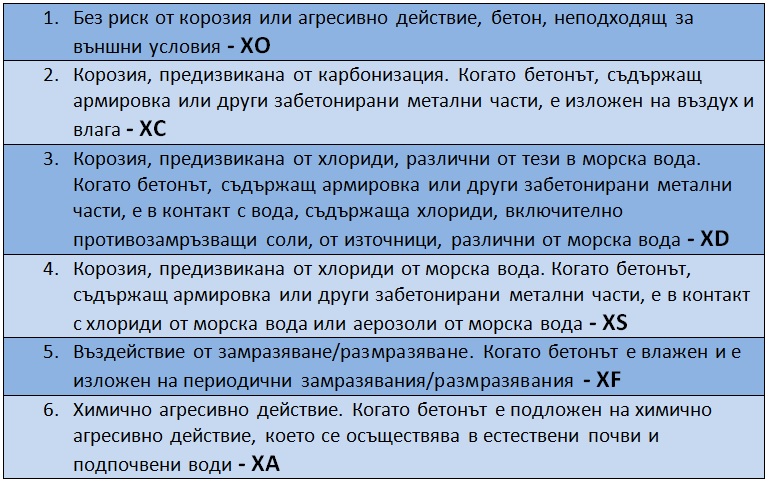
- Environmental exposure classes for concrete
- Maximum aggregate size
- Chloride content in fresh concrete
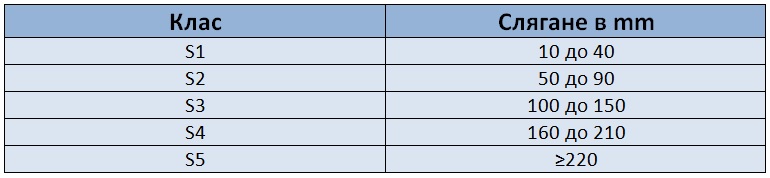
- Consistency
- Density (lightweight concrete only)
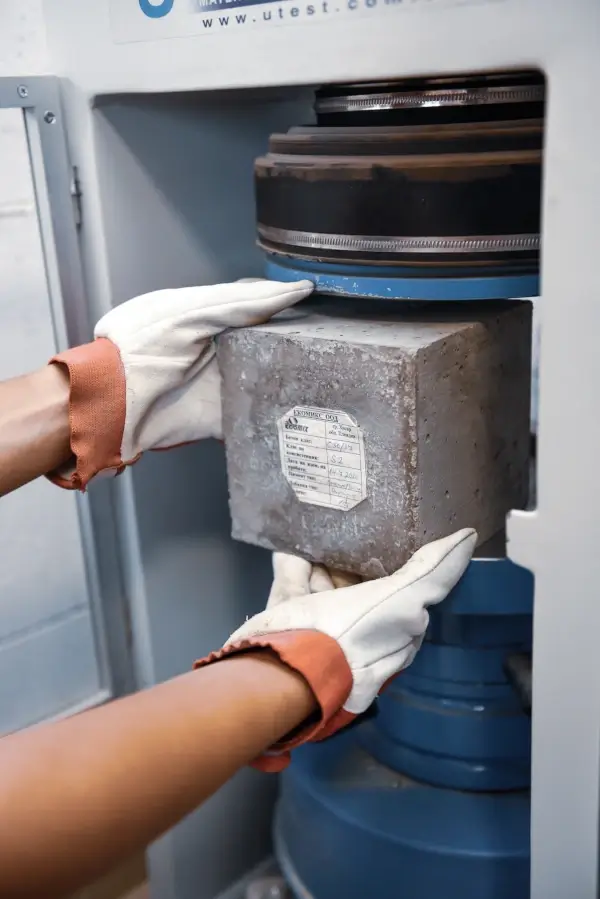
Ecomix Ltd has a professionally equipped testing laboratory for quality control during production and testing. Our experienced operators can develop custom mix designs and provide expert advice.
Our laboratory
| Compressive strength class | Minimum characteristic cylinder strength | Minimum characteristic cube strength |
|---|---|---|
| C8/10 | 8 | 10 |
| C12/15 | 12 | 15 |
| C16/20 | 16 | 20 |
| C20/25 | 20 | 25 |
| C25/30 | 25 | 30 |
| C30/37 | 30 | 37 |
| C35/45 | 35 | 45 |
| C40/50 | 40 | 50 |
| C45/55 | 45 | 55 |
| C50/60 | 50 | 60 |
| C55/67 | 55 | 67 |
| C60/75 | 60 | 75 |
| C70/85 | 70 | 85 |
| C80/95 | 80 | 95 |
| C90/105 | 90 | 105 |
| C100/115 | 100 | 115 |
Chemical admixtures for concrete
We offer chemical admixtures for concrete mixes to meet customer requirements. These substances are dissolved in water and added to concrete, where they change fresh or hardened concrete properties through physical or chemical action, including workability, initial setting, hardening and durability. Examples include anti-freeze and superplasticising admixtures and polypropylene fibres.
Ongoing quality control
Our in-house testing laboratory monitors the production and testing of concrete mixes. Mix designs are approved by CIES Ltd. All concrete classes are certified under Regulation (EU) No 305/2011 and BDS EN 206:2014+A1:2016/NA. Materials for concrete and mortar come from leading suppliers and are accompanied by quality certificates.
Enquiry
Contact us or send an enquiry using the form below.